 08750858484
 antimswargyatra@gmail.com
 Ram Nagar, Nehru Stadium, Ghaziabad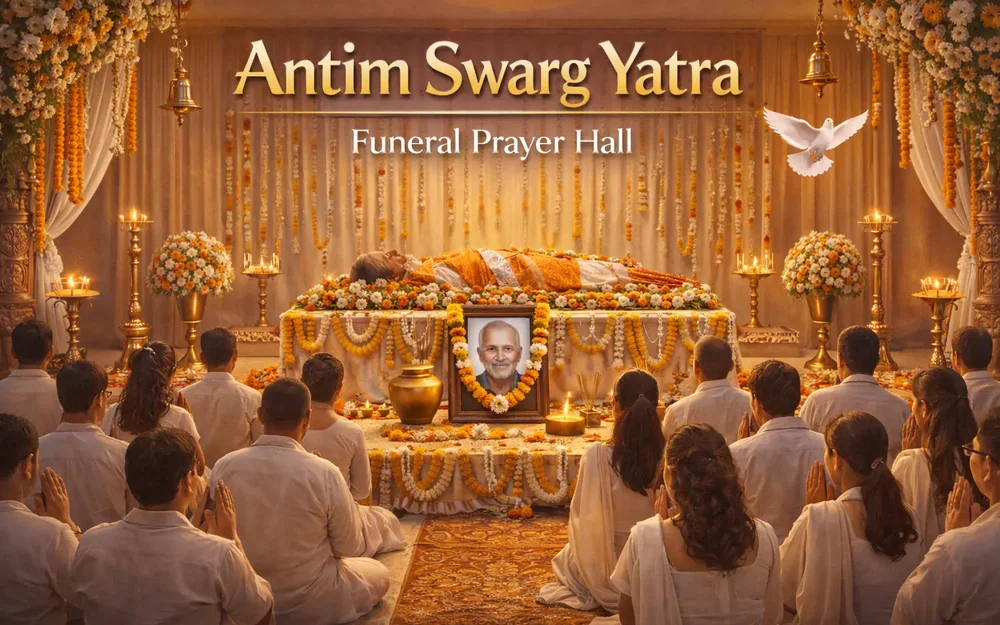
By Antim Swarg Yatra · Updated
The cremation is over, the house is full of people, and someone asks what is being done on the fourth day. Most families are organising this for the first time. Here is what the days involve and what has to be arranged for each.
The shape of the thirteen days
Hindu tradition treats the period after death as a passage the family observes rather than hurries through. Practice varies by community and region - what follows is what is common across Delhi NCR, and your family pandit's instruction always takes precedence over anything written here.
- Day 1 - cremation, followed by the ashes being collected the next morning.
- Day 3 or 4 - asthi sanchayan, the gathering of the ashes, and often the journey for asthi visarjan.
- Day 4 - chautha, also called uthala or phool chunna in different families. The first large gathering.
- Day 13 - terahvin (tehrvi), when the mourning period formally closes.
Chautha or uthala: the fourth day
This is the gathering where the extended family, neighbours and colleagues come to pay respects. It is usually held in the afternoon or early evening, either at the home or, when the numbers are large, at a hired hall.
What has to be arranged:
- A hall, if the home cannot hold the numbers. Fifty people fit in a drawing room; two hundred do not. We book prayer halls across Delhi NCR, usually at a day's notice.
- Seating, white sheets, and a sound system - bhajans or a recording, and a microphone if anyone will speak.
- A framed photograph, garland and flowers. Restraint is the convention. See funeral decor.
- A pandit for the path or prayers, if your family observes it on this day.
- Tea and light refreshment for people who have travelled.
Notice matters here. Families typically decide on the second day and want the hall on the fourth, which is possible but tighter than it needs to be.
Terahvin: the thirteenth day
The thirteenth day closes the mourning period. The rituals are more formal - a havan or path performed by the pandit, pind daan in many families, and a meal offered to brahmins and to the gathering. After it, the family formally returns to ordinary life.
What has to be arranged:
- Pandit and the havan samagri - the ritual materials, which we supply as one kit. See antim sanskar samagri.
- The venue, generally the home if the ceremony is small, a hall if the meal is being served to a large gathering.
- Catering - a simple satvik meal, without onion or garlic in most families.
- Dakshina and daan - clothing, grain or utensils given in the departed's name, which the pandit will advise on.
Questions families ask us
Do we have to hold chautha and terahvin both? Many families now hold one gathering, usually on the thirteenth day, particularly when relatives are travelling from abroad. That is a decision for the family and its pandit, not a rule.
What if the thirteenth day is inconvenient? It can be observed a day earlier or later where circumstances demand, and it commonly is. Ask your pandit for the acceptable window.
How much notice do you need? A hall at a day's notice is usually possible in Delhi NCR. Pandit, samagri and decor at half a day. If you tell us on the day of the cremation what you are planning, none of it becomes a scramble.
Arranging it in one call
The whole point of asking us is that the family should not spend the fourth day on the phone to caterers. Hall, seating, sound, photo framing, flowers, pandit, samagri and food are one arrangement and one bill.
Call 08750858484 and tell us the day and the likely numbers. We will take it from there.
For the meal after a gathering, see chautha, tehravin and bhoj catering. Share the guest count, menu preferences and venue when requesting a quote.